
Bihar’s Beloved Baavanbuti by Bun.Kar Bihar

An introduction
The still but shifty silence of the classroom was a space that wove more than academic principles in the minds of students at “Half -Time School”, Mogulkuangaon, in the deep interiors of Bihar. At precisely half-time, the rustic bell gonged, and out poured children who, under the diligent tutelage of Ramnandan Sir, their then Bunai Master, headed to the loom to learn the basics of weaving. Little did one child in this batch know just how impactful his lessons from both Half-Time School and his father, Hari Tanti, would be, as calendar years swept by.
This child was none other than Kapil Dev ji, the force behind the Weaver’s Cooperative Society, Nalanda, who today,is a prominent figure in embellishing Bihar’s textile heritage with an art and skill that was once patronized heavily by rich landlords across this Indian state – baavanbuti. This is his story as much as it is the story of countless weavers whose livelihoods were intricately woven in the fabric of handloom; perhaps just as beautifully as Bihar’s baavanbuti is.
What the hands of a creator experiences and creates, remains indelible long after physicality degenerates. And so, Kapil Dev ji, who having stopped weaving years ago, lives to share his invaluable knowledge as we work towards arresting the extinction of this indigenous craft as consumers across the globe reach out to help hold on.
A little about Baavanbuti
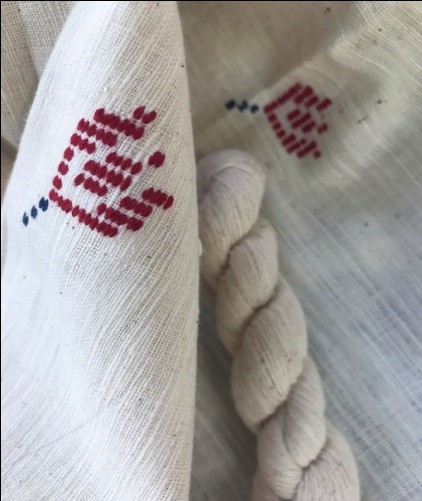
Baavan meaning 52, and buti meaning motif is a traditional weaving technique home to the south-central belt of Bihar, India. Weavers craft 52 motifs as surface ornamentations on both components of the sari – the body and the aanchal (end-piece).This stunning and fascinating display of mathematical and geometrical precision, along with a keen eye for finesse and quality has led weavers of this craft to be much sought after during their time over 400 years ago.
A description of the craft
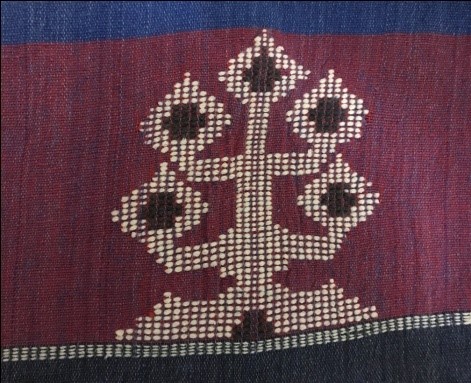
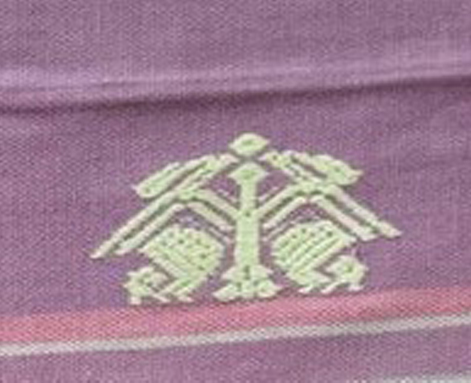
Creating baavanbutis across the length and breadth of a fabric involves the insertion of an extra weft to the standard weft which holds the warp yarns together. As the shuttle moves,the weft yarn in the shuttle intertwines with the warp yarns to create a base fabric on the loom. It is to this base fabric that an extra weft is inserted by hand using a small spool of yarn to create an extra weft motif.Some of the original traditional motifs were:Paan (Betel leaves), Parwal (Pointed Gourd), Peacock, and Cowrie shells which embellished coarser 20’s count in cottons.
Kaudi (Cowrie Shells)
Pan Leaf (Betel Leaf)
Parwal (Pointed Gourd)
Mor (Peacock)
This artistry was primarily seen on saris as affluent families thronged weavers in serpentine lines to place their orders for designs of their choosing. Today, baavanbuti also embellishes other hand-woven fabrics such as stoles,dupattas, home linen, and the likes. It is interesting to note that weavers draw their designs on graph paper as a precise point of reference even today. Despite the skill and experience of a weaver, this piece of craftsmanship still requires numerous attempts to maintain precise placement and form on the fabric.
Where the craft stands today
Kapil Dev ji reminds us of the immense and invaluable contribution of Upendra Maharathiji whose tireless efforts prevented the time-tested erosion of tradition courtesy rampant urbanization followed by mindless consumerism. The tides of time and its vagaries did take a toll on the weaver community as people migrated towards more lucrative opportunities. The number of weavers equipped with this skill are few and far in between; a jarring and cruel reminder of the fragility where absence of demand is concerned.
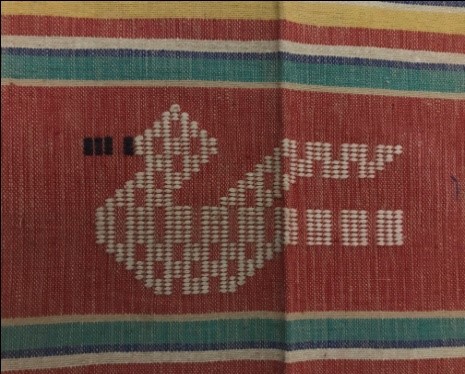
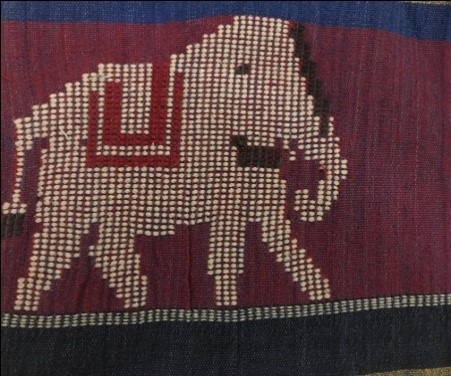
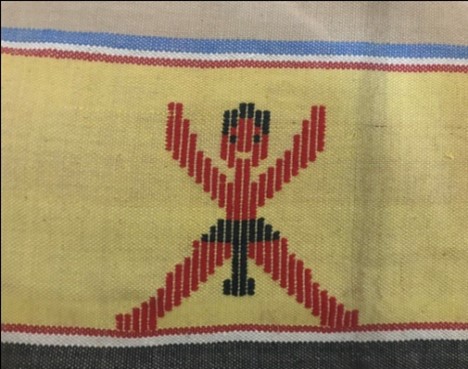
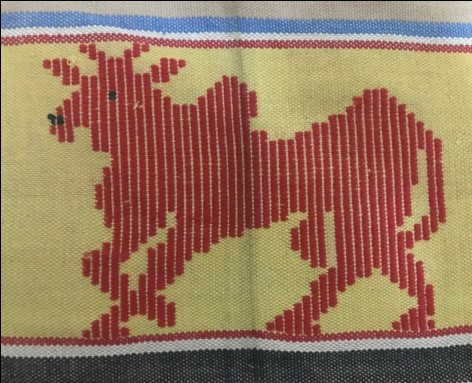
We join Kapil Dev ji to acknowledge the invaluable contribution of the legendary artist Upendra Maharathi ji who worked relentlessly to help artisans create masterpieces in various traditional crafts of the state including beautiful extra weft home line fabrics that changed the course of this skill and widened the market to include curtains,bed covers, table covers, and more. His dedication to the preservation of an art so pure led to the propagation of more intricate motifs such as the lotus flower, birds, elephant, bull, boy, etc., all of which resonate with the ever-changing palate of textile trends.
Bun.Kar Bihar & its contribution
We at Bun.Kar Bihar stand rooted in the revival and promotion of this precious skill and have worked tirelessly to help maintain integrity where both the art and the artist is concerned. Our Design Consultants, Amit & Richard of Amrich Designs have worked to give this exquisite, but largely ignored tradition the benefit of a fast-changing market by making it more relevant to the expansive eclectic taste in fashion.
Combined with their effort to maintain the integrity and vocabulary of colours, forms, products, and skill utilized for this technique, we as a team work not just on the craft but also on the countless who could potentially benefit from the revival of baavanbuti into mainstream handloom production.
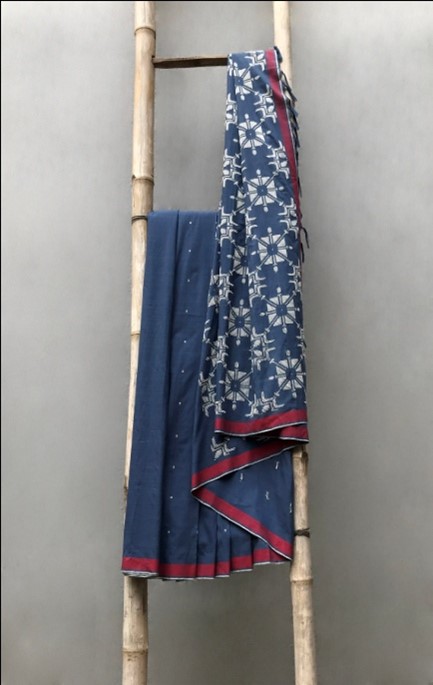
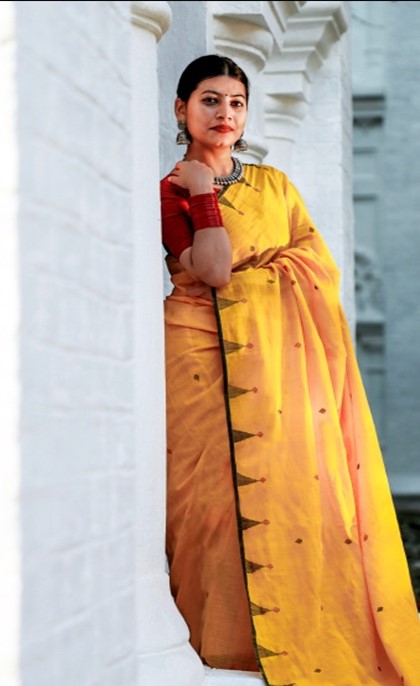
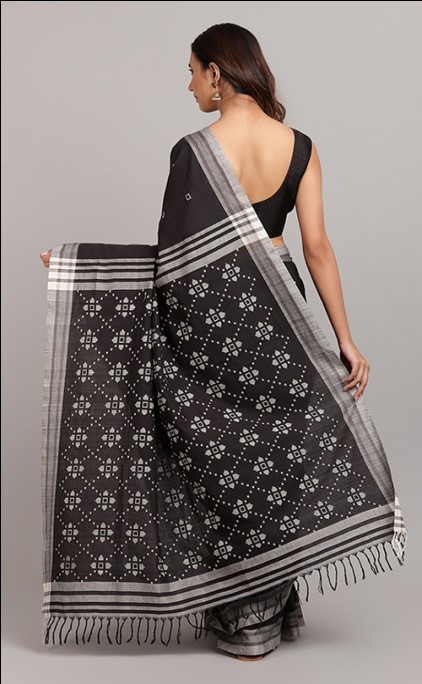
Bavanbuti Saris
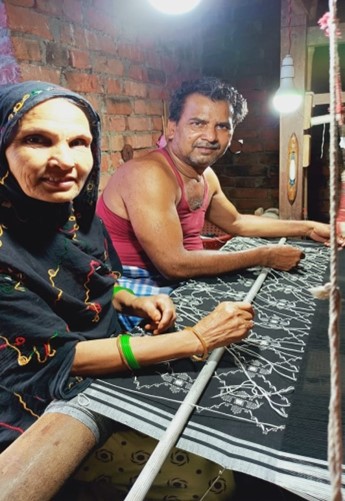
Shami & Nasira Khatoon weaving a bavanbuti sari in Siwan District
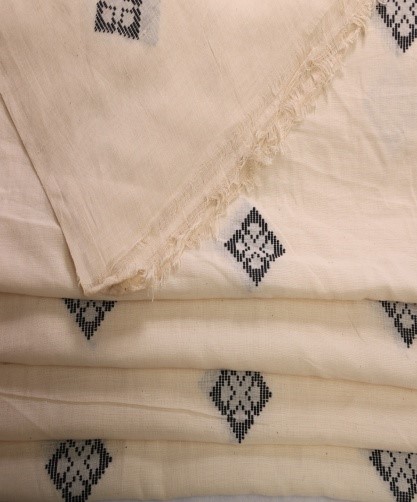
Hand spun fabric with Motif
Srijani Foundation has invested significant resources to conduct several workshops for weavers with the commitment to create demand in the textile and handloom space across India, and internationally. The result has been a heartwarming rise in weavers opting to take this craftsmanship forward by sitting at the loom again; a place whose sanctity was previously silenced by the whir of power looms and the thirst for finances often sought in menial labour.
Today, we at Bun.Kar Bihar are immensely proud of the rewarding, albeit arduous journey so far. Not only do we witness educated youth return to their villages with the aim to help us revive Bihar’s Beloved Baavanbuti, but we have achieved sustained production on at least one loom per weaver over the past four years. Each high-skilled weaver averages an income of INR 12 – 14,000 per month with an added assurance of regular production from Srijani Foundation. Our mission is to help them grow into successful entrepreneurs over the next five years.
Tradition is not to preserve the ashes but to pass on the flame; says Gustav Mahler.Keeping his words in line with our philosophy, the Bun.Kar Bihar family is committed to helping this torch burn long and bright as we endeavour to bring baavanbutito the global platform of handloom and textiles. Our perseverance is as intricately woven to this fabric of time as the once rusty school bell which ignited the minds and hearts of many like Kapil Dev ji.