
Tinaz Nooshian’s article on Swadheen for Mid-day


Indoctrinated to revere Khadi as the symbol of resistance, we worship a fabric we don’t buy. An exhibition-symposium opens in the city to answer uncomfortable questions, reveal beauteous innovations, and cheer the lot determined to make it rock
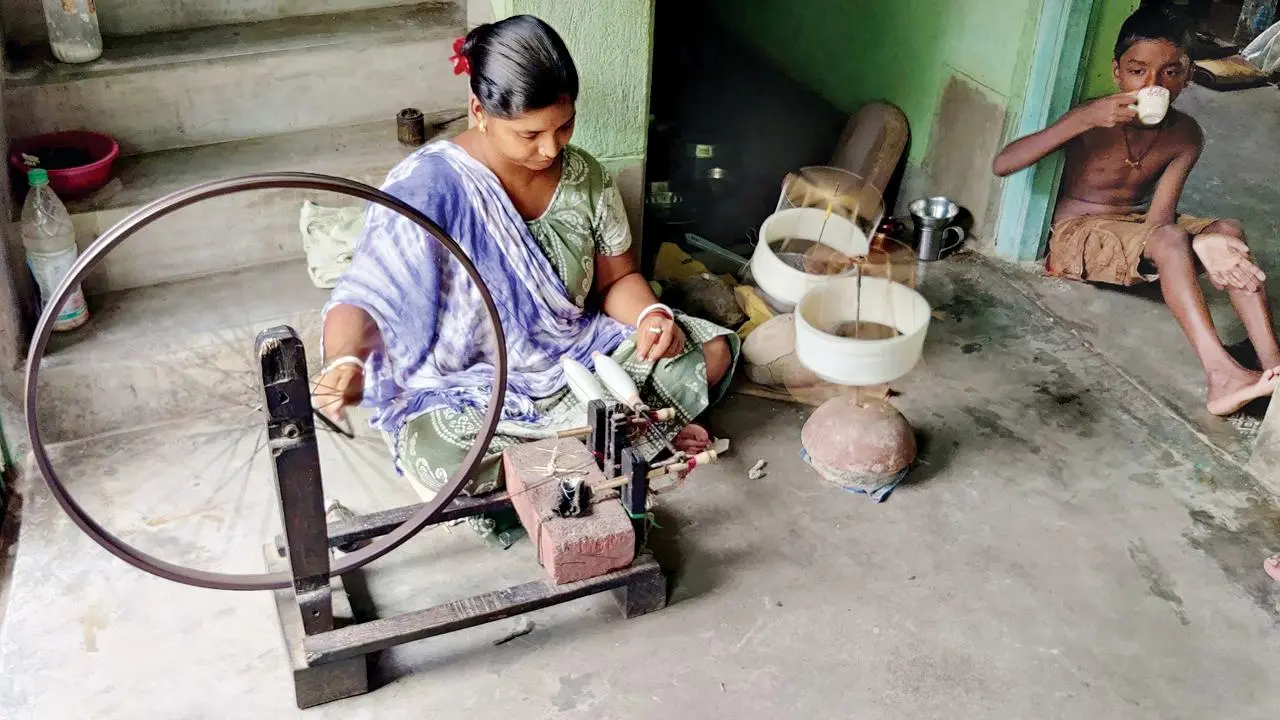
A bobbin winder at work in her home. In the process, hank yarn is mounted on a bamboo frame and wound onto cylindrical bobbins by turning the charkha. A decentralised activity, spinning is usually done by women, and especially in times of economic crisis, can prove to be a critical additional source of income for rural households. Pic courtesy/Swadheen
We have hijacked Savitha Suri. On a Tuesday afternoon when she should’ve been at Nariman Point’s Kamalnayan Bajaj Hall & Art Gallery delivering the coup de grâce to a three-day symposium-exhibition on Khadi, she is roaming the alleys of Parel, a historic working-class neighbourhood dotted with swarthy vacant shells of textile mills. She flits, in a pomegranate-hued Khadi gamcha saree gifted by a friend, between Apollo and Elphinstone Mills. The latter is where a 20-feet pyre of British-manufactured goods was lit by Mahatma Gandhi on July 31, 1921, surrounded by 12,000 people, all dressed in Khadi.